Management and Administration Rules (Rule 2-10)
Rule 2. Definitions
(1).
In these rules, unless the context otherwise requires:
(a). Act means the Companies Act, 2013 (18 of 2013).
(b). Annexure means the Annexure to these Rules.
(c). Fees means the fees as specified in the Companies (Registration offices and fees) Rules, 2014.
(d). Form or e-form means a form given in the Annexure to these rules, and it must be used for the purpose it is meant for.
(e). Regional Director means the person appointed by the Central Government in the Ministry of Corporate Affairs as a Regional Director.
(f). Section’’ means section of the Companies Act, 2013.
(2).
If any word or expression appears in these rules but is not defined here, but is defined in either:
The Companies Act,
The Companies (Specification of Definitions Details) Rules, 2014, then:
That word or expression will carry the same meaning as given in the Act or those Rules.
Rule 3. Register of members
(1).
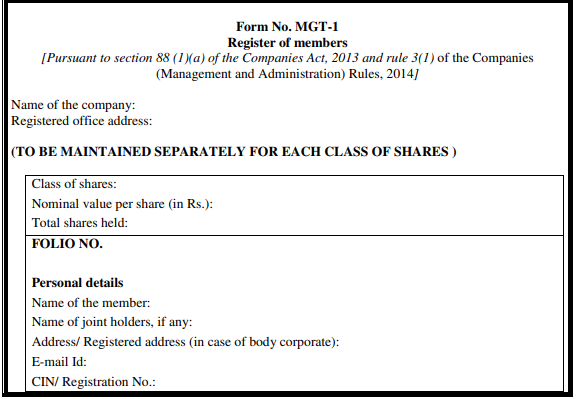
Every company limited by shares must maintain a register of members.
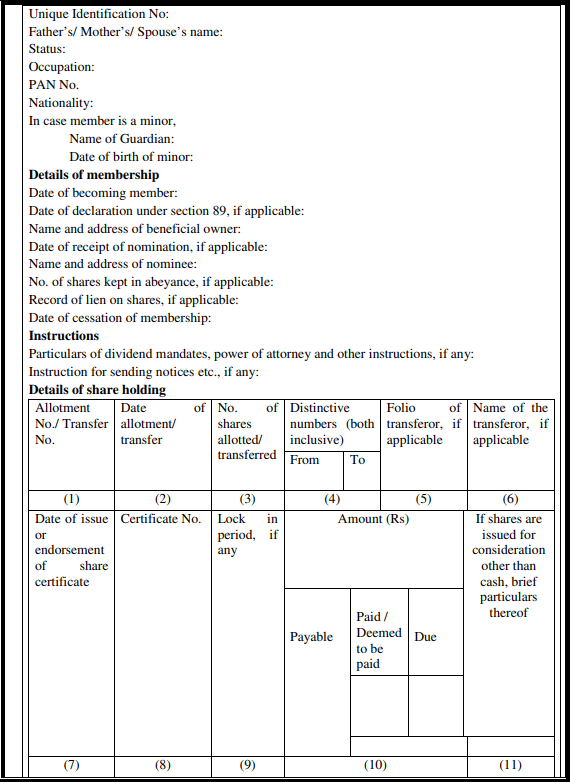
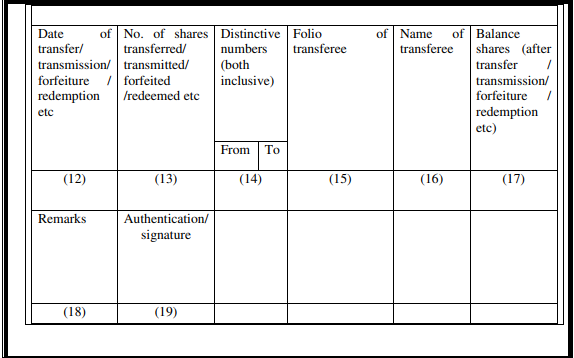
This register must be kept in Form MGT-1.
This requirement applies from the date the company is registered.
If the company was already in existence when the 2013 Act commenced, it must transfer all member details from the old register (maintained under the Companies Act, 1956) to the new register in Form MGT-1.
If the Act or these rules require additional information and members later provide such information then:
Such information can be added to the MGT-1 register whenever the company receives it.
(2).
Companies without share capital must maintain a register of members, and it must include the following details for each member:
(a). Basic particulars of the member
Name
Address (If a body corporate then registered office address)
Email address
PAN or CIN
Unique Identification Number, if any
Father’s / Mother’s / Spouse’s name
Occupation
Status (e.g., individual, company, society, etc.)
Nationality
If the member is a minor:
Name of guardian
Date of birth of the minor
Name and address of the nominee
(b). Date of becoming a member
The exact date on which the person was entered into the register.
(c). Date of cessation
The date the person stopped being a member (resignation, removal, death, etc.)
(d). Additional Details
Amount of guarantee, if any (relevant in companies limited by guarantee)
Any other interest of the member, if applicable.
Any special instructions from the member regarding sending notices or communications
For companies without share capital that already existed when the Companies Act, 2013 came into force:
The details of members recorded in the old register of members maintained under the Companies Act, 1956 must be transferred to the new register of members in Form MGT-1.
If members later provide additional information required under the 2013 Act and its rules, this information must be added to the register whenever it is received.
To Access Form MGT -1: https://ca2013.com/register/register-of-members-debenture-holdersother-security-holders/
Please note that Form MGT-1 is also filed electronically through the MCA V3 portal.
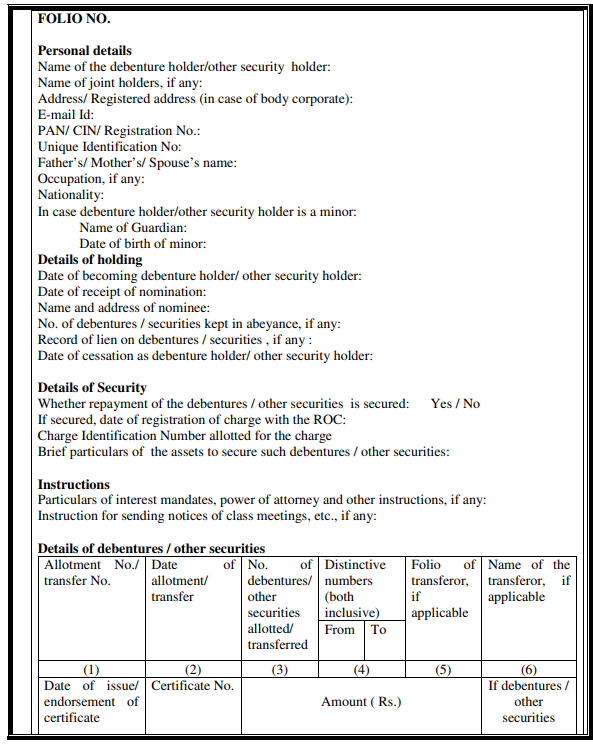
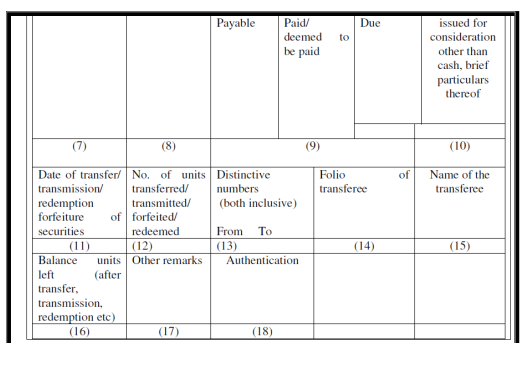
Rule 4. Register of debenture holders or any other security holders
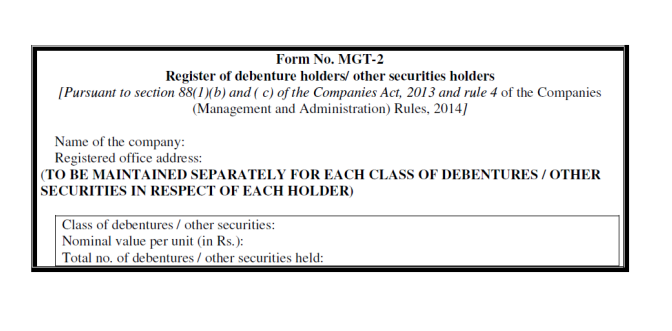
Any company that issues or allots debentures or any other type of security must maintain a separate register for those holders.
This means there must be different registers for each type of debenture or security issued.
These registers must be maintained in Form MGT-2.
To Access Form MGT -2: https://ca2013.com/register/form-no-mgt-2-register-of-debenture-holders-other-securities-holders/
Please note that Form MGT-2 is filed electronically through the MCA V3 portal.
Rule 5. Maintenance of the Register of members etc. under section 88
Every company shall maintain the registers under clauses (a), (b) and (c) of section 88(1) in the following manner namely:
(1).
For registers maintained under Section 88 (Register of members, Debenture holders, and other security holders):
All required entries must be made within 7 days after the Board of Directors or a duly constituted committee approves:
The allotment of shares, debentures, or other securities.
The transfer of such securities.
(2).
The registers required under Section 88 must ordinarily be kept at the registered office of the company.
However, the company may keep the registers at another location if a special resolution is passed in a general meeting.
The alternate location must be either:
Within the same city, town, or village as the registered office.
Anywhere in India where more than one-tenth of the company’s members listed in the register of members reside.
(3).
When any change takes place in the company’s share capital or security holdings because of events such as:
Forfeiture.
Buy-back.
Reduction of share capital.
Sub-division or consolidation of shares.
Cancellation of shares.
Issue of sweat equity.
Transmission of shares.
Issue of shares under schemes of arrangement, mergers, reconstitution, ESOPs.
Issue of duplicate or new share/debenture/security certificates then:
The company must update the relevant register. (The register of members or the register of debenture/security holders, as applicable.)
This entry must be made within 7 days of the Board’s approval or the approval of a duly constituted committee.
(4).
If there is any change in the status of a:
Member.
Debenture holder.
Other security holder, then the company must update the relevant register.
Such changes may occur due to:
Death.
Insolvency.
Change of name,
Transfer of securities to the Investor Education and Protection Fund (IEPF).
Any other reason.
The company must make entries in the respective register clearly explaining the nature of the change.
(5).
If the company rectifies (corrects or updates) any entry in the register maintained under Section 88,
And this rectification is made because of an order passed by a competent authority under the Companies Act. (such as Tribunal , ROC)
Then the company must record a reference to that order in the relevant register.
(6).
If any judicial authority, revenue authority, SEBI, or any other competent authority passes an order attaching any shares, debentures, or other securities,
Or if such an order gives directions regarding payment of dividend or interest relating to those securities then:
The company must make an entry in the relevant register clearly indicating a reference to that order.
(7).
If a company’s securities are listed (in India or abroad), it must record details of certain encumbrances created by promoters.
Whenever a promoter creates any of the following over the securities they hold:
Pledge
Charge
Lien
Hypothecation
Then the company must enter these details in the register of members.
The entry must include:
The fact that a pledge/charge/lien/hypothecation has been created.
The name of the Pledgee/Pawnee. (The person in whose favour it is created)
Details of any revocation or cancellation of the encumbrance
The company must update the register within 15 days of the creation or revocation of such encumbrance.
(8).
If the promoters of a listed company pledge, hypothecate, or create a charge or lien over any of the listed company’s securities,
And this is done in connection with a joint venture company formed with another company, then:
The details of that pledge, hypothecation, charge, or lien must be recorded in the register of members of the listed company.
This entry must be made within 15 days from the date the pledge/charge/lien/hypothecation occurs.
Rule 6. Index of names to be included in Register
(1).
Every register maintained under Section 88(1) (register of members, debenture holders, or other security holders) must also have an index of names.
This index must provide enough detail for each folio so that the corresponding entries in the register can be easily located.
If the company has less than 50 members, it is not required to maintain an index.
(2).
The company shall make the necessary entries in the index simultaneously with the entry for allotment or transfer of any security in such Register.
Rule 7. Foreign register of members, debenture holders, other security holders or beneficial owners residing outside India
(1).
A company that has share capital, or has issued debentures or any other security, may maintain part of its register outside India.
This is allowed only if the company’s articles of association permit it.
The company may keep, in another country, a portion of the:
Register of members.
Register of debenture holders.
Register of other security holders.
Register of beneficial owners, covering persons who reside in that foreign country.
This overseas register is referred to as the “foreign register.”
(2).
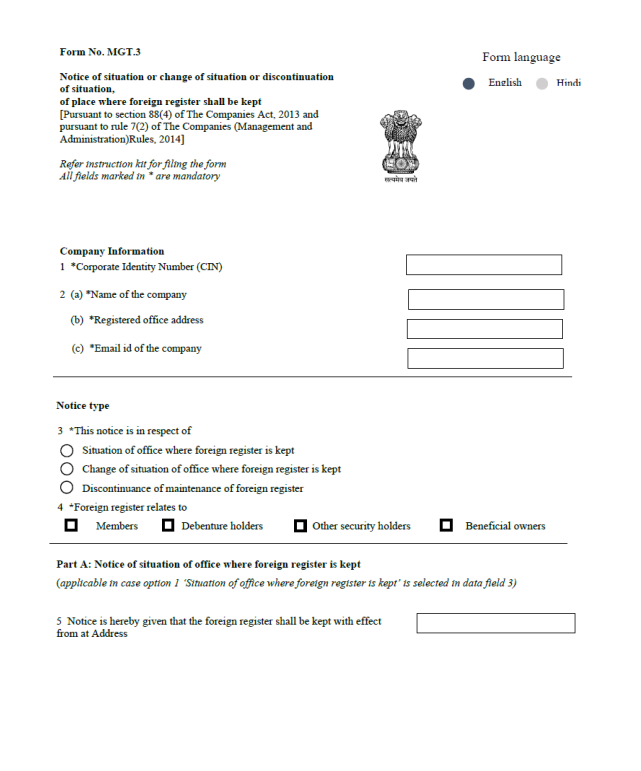
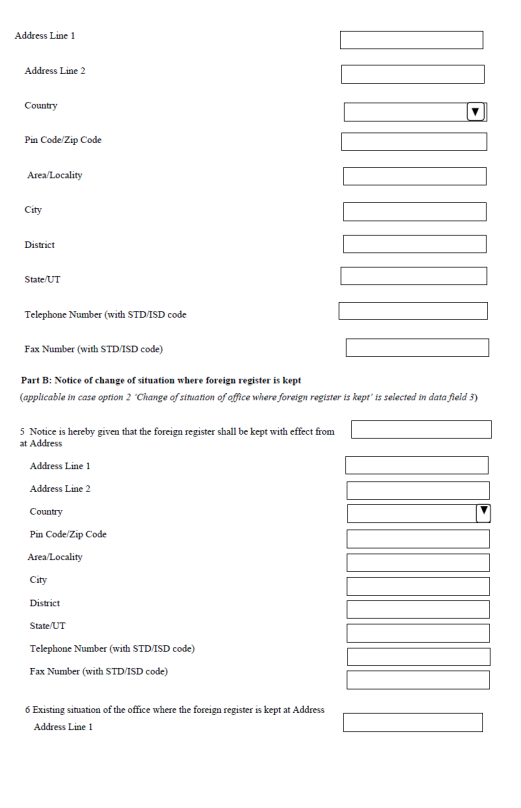
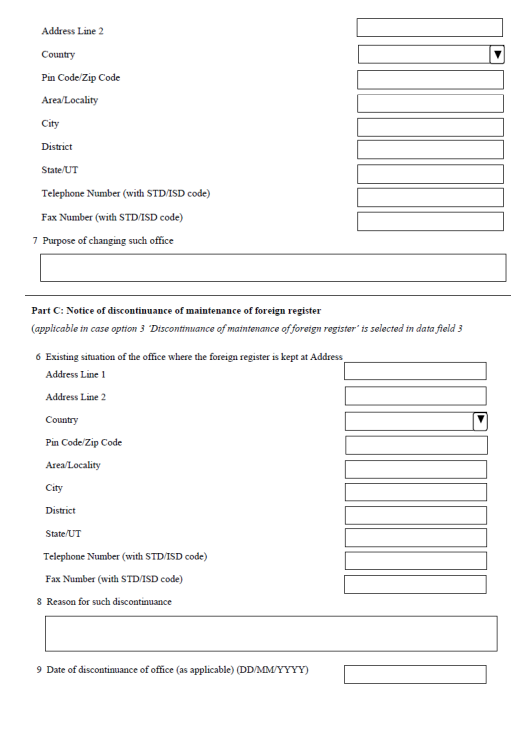
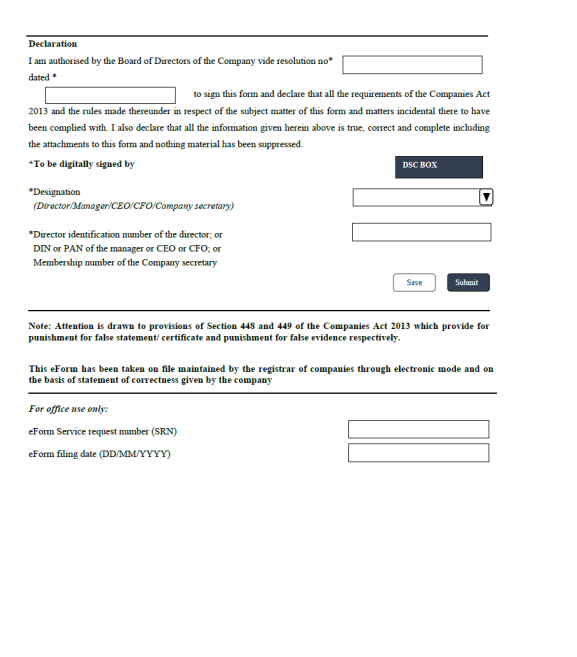
When a company opens a foreign register, it must notify the Registrar of Companies (ROC).
The notice must be filed within 30 days from the date the foreign register is opened.
The notice must be submitted in Form MGT-3, along with the prescribed fee, and must specify the location of the office where the foreign register is kept.
If the company later:
Changes the location of that office, or Discontinues the foreign register.
Then it must again file Form MGT-3 with the ROC.
This notice must also be filed within 30 days of the change or discontinuance.
(3).
A foreign register maintained outside India is legally considered to be a part of the company’s main register.
The main register kept in India is referred to as the “principal register.
Therefore, the foreign register is treated as an extension of the principal register of:
Members.
Debenture holders.
Other security holders.
Beneficial owners, depending on which type of register it is.
(4).
The foreign register shall be maintained in the same format as the principal register.
(5).
A foreign register must follow the same rules as the principal register regarding:
Inspection.
Closing the register.
Taking extracts.
Obtaining copies.
(This applies mutatis mutandis, meaning with necessary changes to fit the foreign context.)
Exception:
When the foreign register is to be closed, the required advertisement must be published in at least two newspapers that are circulating in the place where the foreign register is kept (instead of newspapers in India).
(6).
If a company maintains a foreign register in a country outside India,
Then any decision made by the appropriate competent authority in that foreign country regarding rectification (correction or amendment) of the register
Shall be binding on the company.
(7).
When the Board of Directors or its committee approves the allotment or transfer of shares, debentures, or any other securities then:
The company must update the foreign register at the same time as the principal register in India.
(8).
A company that maintains a foreign register of members must comply with two obligations.
(a)
Every time an entry is made in the foreign register, the company must send a copy of that entry to its registered office in India.
This must be done within 15 days of making the entry.
(b) Maintaining a duplicate register in India
The company must keep a duplicate register in India.
This duplicate register must be updated regularly with every entry received from the foreign register.
(9).
Every such duplicate register shall, for all the purposes of this Act, be deemed to be part of the principal register.
(10).
Shares, debentures, or other securities that are recorded in a foreign register must be clearly distinguished from those recorded in:
The principal register in India/
Any other foreign register maintained by the company.
While a security is registered in one foreign register, no transaction involving that security may be recorded in any other register (including the principal register).
(11).
The company may discontinue the keeping of any foreign register.
Thereafter all entries in that register shall be transferred to some other foreign register kept by the company outside India or to the principal register.
To Access Form MGT-3: https://ca2013.com/wp-content/uploads/2023/01/MGT-3.pdf
Please note that Form MGT-3 is also filed electronically through the MCA V3 portal.
Rule 8. Authentication
(1).
All entries made in the registers maintained under Section 88 and the index included in those registers must be authenticated.
The authentication must be done by either:
The company secretary, or any other person authorised by the Board of Directors for this purpose.
The company must also mention the date of the Board resolution that authorised the person performing the authentication.
(2).
The entries in the foreign register shall be authenticated by the company secretary of the company or person authorised by the Board by appending his signature to each entry.
Rule 9. Declaration in respect of beneficial interest in any shares
(1).
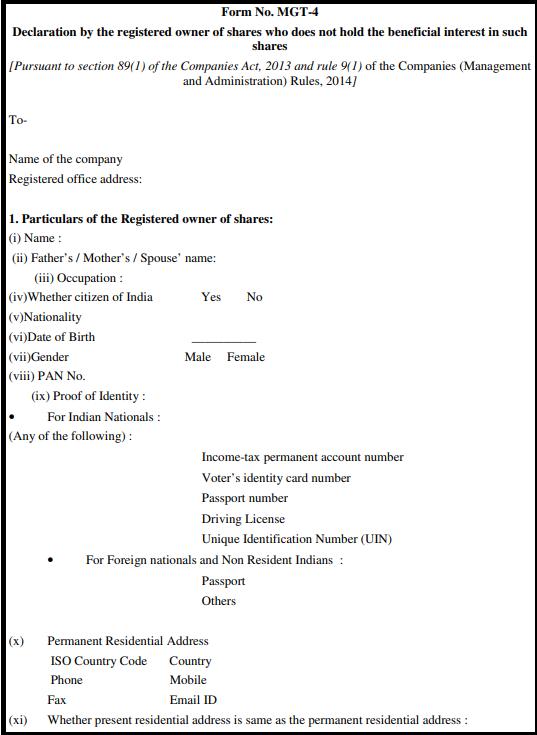
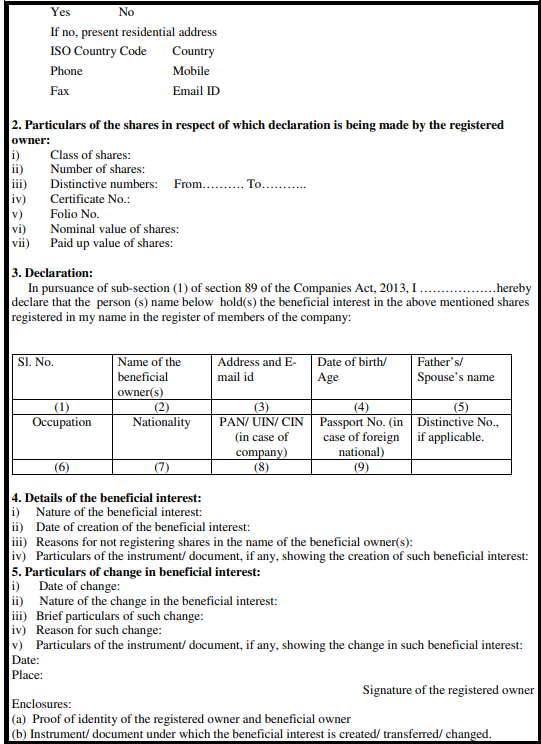
If a person’s name is entered in the register of members as the holder of shares, but that person does not actually hold the beneficial interest in those shares, he is called the Registered owner.
Such a registered owner must file a declaration with the company in Form MGT-4.
This declaration must be filed within 30 days from the date his name is entered in the register of members.
If any change occurs in the beneficial interest of those shares, the registered owner must again file a declaration of that change in Form MGT-4.
This declaration must also be filed within 30 days of the change.
(2).
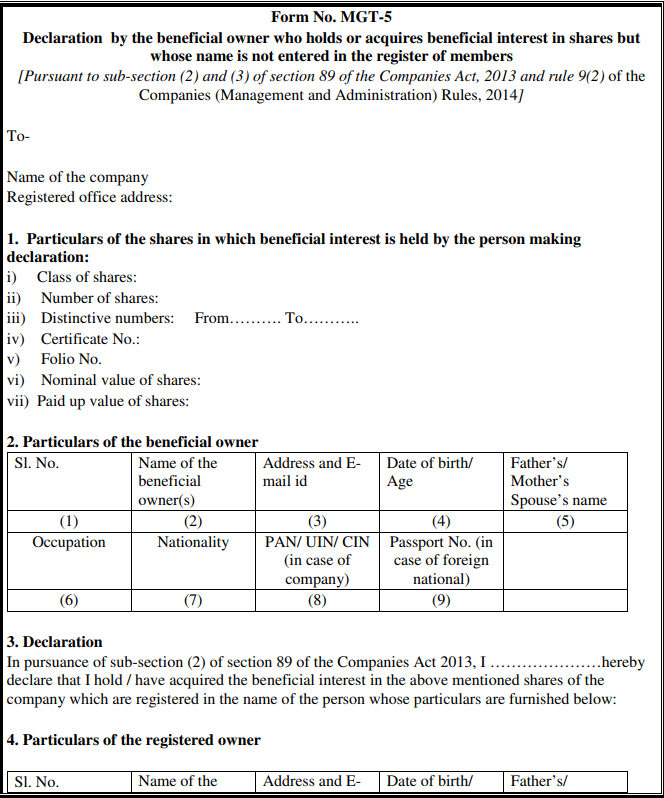
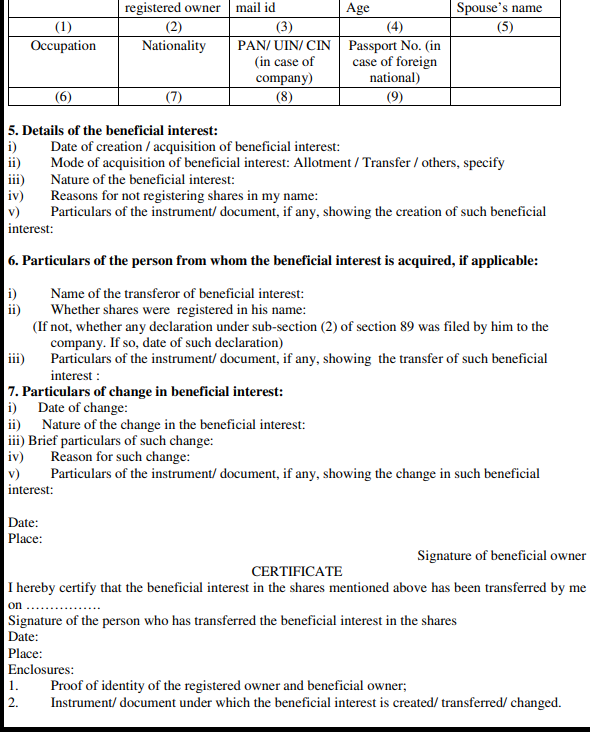
A person who holds beneficial interest in shares of a company, but whose name is not recorded in the register of members must make a declaration to the company.
This requirement applies even if the person is exempted from furnishing other declarations under the Act.
The beneficial owner must file a declaration in Form MGT-5, in duplicate.
This declaration must be submitted within 30 days of acquiring the beneficial interest.
If any change occurs in the beneficial interest of the shares,
The beneficial owner must file a declaration of the change with the company.
This declaration must be submitted in Form MGT-5.
It must be filed within 30 days from the date the change occurs.
(3).
When a company receives a declaration under Section 89 from a registered owner or beneficial owner then:
The company must make a note of this declaration in the register of members.
The company must also file a return with the Registrar of Companies in Form MGT-6.
This filing must be done within 30 days from the date the declaration is received.
The filing must be accompanied by the prescribed fee.
This rule does not apply to declarations related to a trust created for establishing:
A Mutual Fund.
A Venture Capital Fund.
Any other SEBI-approved fund.
(4).
Every company must appoint or designate a specific person.
This designated person will be responsible for providing information regarding the beneficial interest in the company’s shares.
The person must also co-operate fully with:
The Registrar of Companies, or any other authorised officer, whenever such information is requested.
(5).
For fulfilling the requirement under (4), the company may designate any of the following:
(i). A company secretary, if the company is required to appoint one under the Companies Act and its rules.
(ii). Any key managerial personnel (KMP), if there is no company secretary.
(iii). Every director of the company, if the company has neither a company secretary nor any KMP.
(6).
Until a person is designated as referred under (4) , then any of the following persons shall be deemed to have been designated person:
(i). Company secretary, if there is a requirement of appointment of such company secretary under the Act and the rules made thereunder.
(ii). Every Managing Director or Manager, in case a company secretary has not been appointed.
(iii). Every director, if there is no company secretary or a Managing Director or Manager.
(7).
Every company shall inform the details of the designated person in Annual return.
(8).
If the company changes the designated person at any time, then:
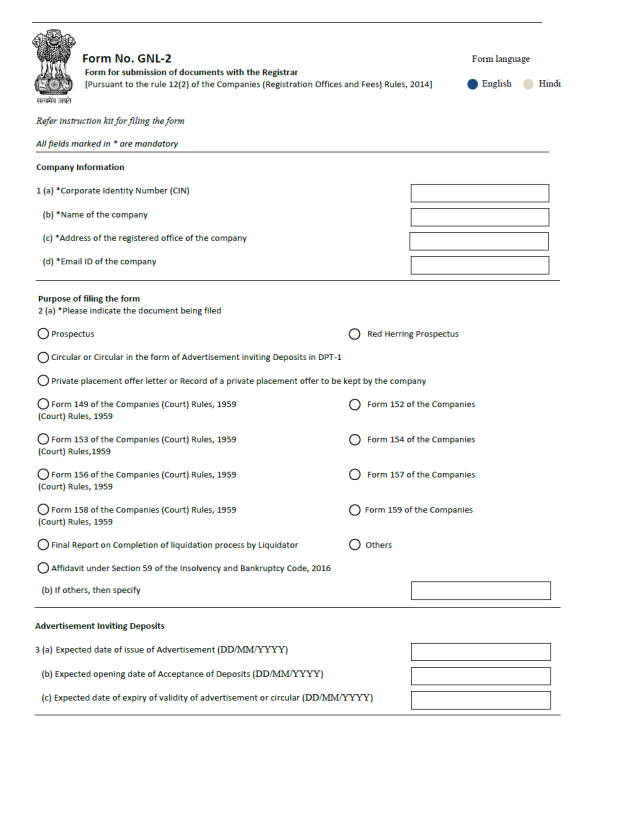
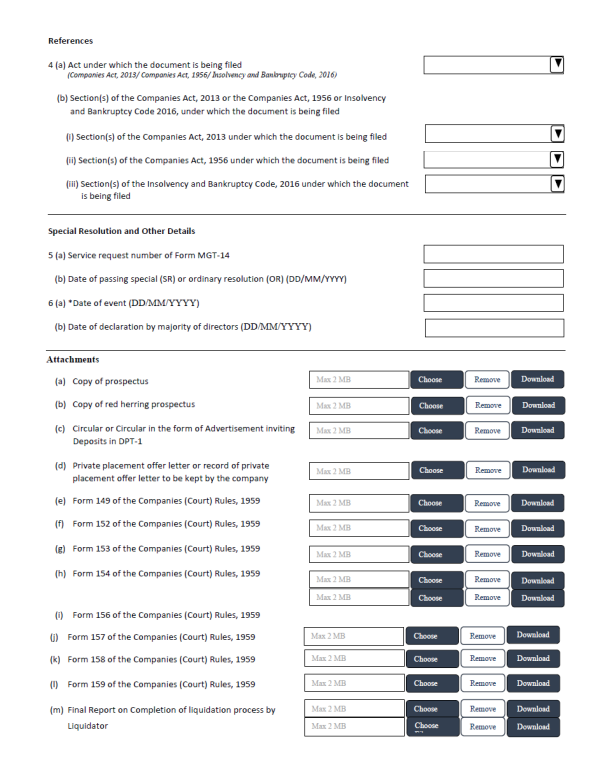
It shall intimate the same to the Registrar in e-form GNL-2 specified under the Companies (Registration Offices and Fees) Rules, 2014
To Access Form MGT - 4 https://ca2013.com/returns/mgt-4/
Please note that Form MGT-4 is also filed electronically through the MCA V3 portal.
To Access Form MGT-5: https://ca2013.com/returns/mgt-5/
Please note that Form MGT-5 is also filed electronically through the MCA V3 portal.
To Access e-form GNL-2: https://ca2013.com/wp-content/uploads/2023/01/GNL-2.pdf
Please note that e-Form GNL-2 also filed electronically through the MCA V3 portal.
Rule 10. Closure of register of members or debenture holders or other security holders
(1).
If a company wants to close any of the following:
Register of members
Register of debenture holders
Register of other security holders, then it must give at least 7 days’ prior notice.
For listed companies or companies intending to list
Such companies must give notice in the manner specified by SEBI, which includes public advertisement.
The notice must be published:
In a vernacular (local language) newspaper
Must be the principal vernacular language of the district where the company’s registered office is located.
Must have wide circulation in that area.
In an English newspaper
Circulating in the same district,
Also having wide circulation.
On the website notified by the Central Government, if any.
On the company’s own website, if the company has one.
(2).
The provisions contained under(1) shall not be applicable to a private company.
Provided that:
Before a private company closes its register of members, register of debenture holders, or register of other security holders.
A notice must be served to all members of the private company.
This notice must be given at least 7 days before the register is closed.
